
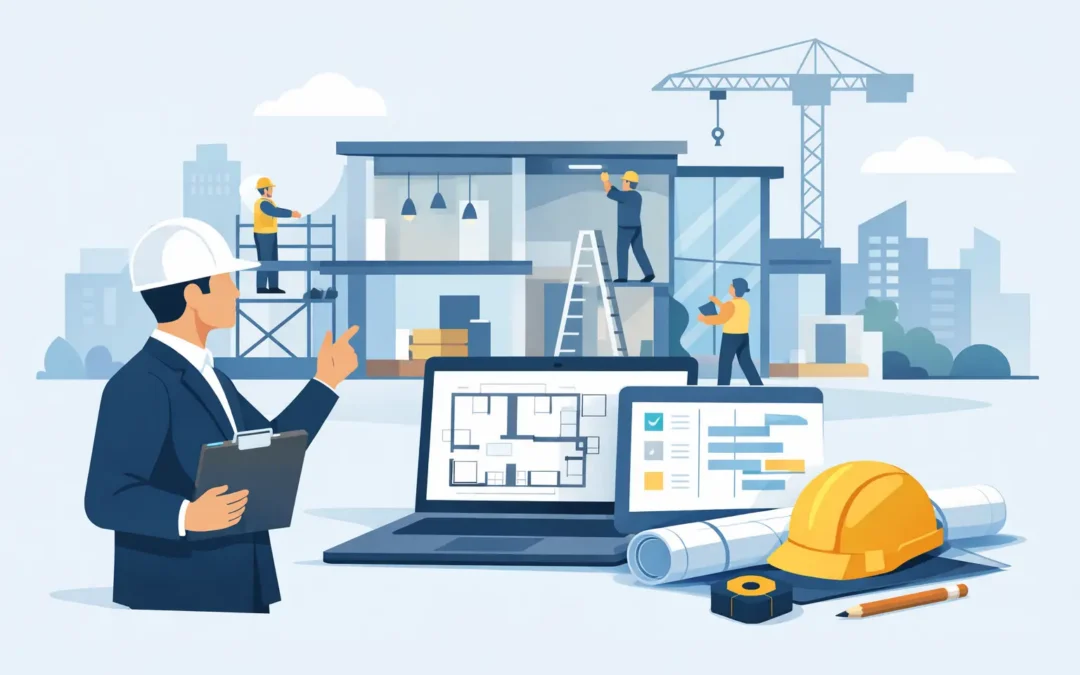
A renovation can improve lease value, correct deferred maintenance, and modernize a property – but only if the work is managed with discipline from day one. Commercial renovation project management is what keeps a promising upgrade from turning into budget drift, schedule delays, tenant complaints, and avoidable rework.
For property owners, facility managers, and operators, the challenge is rarely the idea behind the renovation. The challenge is execution. In occupied office buildings, retail centers, medical facilities, and industrial properties, every decision affects more than the construction area. It affects operations, access, safety, code compliance, and the long-term performance of the asset.
What commercial renovation project management actually covers
At its core, commercial renovation project management is the coordination of scope, schedule, budget, trades, compliance, and communication throughout a renovation. That sounds straightforward, but in practice it means managing a large number of moving parts that often compete with each other.
A property may need interior upgrades, HVAC improvements, concrete repair, exterior work, and life-safety coordination at the same time. One trade cannot move forward until another finishes. Inspections can shift the sequence. Materials may have long lead times. Tenants may need access preserved during business hours. If any of those issues are handled late, the entire project feels the impact.
Strong project management creates order early. It defines the scope clearly, identifies dependencies, sets realistic milestones, tracks costs against actual progress, and gives stakeholders a clear picture of what is happening on site. It also protects against a common problem in commercial renovation: underestimating existing building conditions. Unlike new construction, renovations often reveal hidden issues once demolition begins. That is where experience matters.
Why commercial renovation project management matters more in occupied buildings
Occupied properties leave little room for trial and error. A missed delivery or unplanned shutdown can interrupt tenants, patients, staff, or customers. A noisy phase of work scheduled at the wrong time can create operational problems that reach far beyond the construction zone.
That is why commercial renovation project management is not just about building the work. It is about staging the work. In many cases, the best plan is not the fastest one on paper. It is the one that protects business continuity while still moving the project forward.
For example, a retail center may need phased work that preserves storefront access. A medical office may require infection control measures, after-hours activity, and stricter shutdown planning. An industrial property may need construction coordinated around production schedules and safety protocols. Each scenario changes the management approach.
The trade-off is real. Faster schedules can increase labor costs or require night work. Lower first-cost options can create maintenance issues later. Phasing can reduce disruption but extend the overall timeline. Good project management makes those trade-offs visible before they become problems.
The planning stage sets the tone for the entire project
Most renovation problems do not start in the field. They start in pre-construction, when scope gaps, unrealistic budgets, and incomplete coordination are allowed to move forward.
A well-managed project begins with a detailed understanding of the building, the business use, and the owner’s priorities. Is the goal to improve tenant appeal, address aging systems, comply with updated codes, prepare for a new occupant, or protect the asset from further deterioration? The answer influences every downstream decision.
This stage should also define what success looks like. Some owners are focused on speed to occupancy. Others care most about minimizing operational disruption. Some are prioritizing durability and lower lifecycle cost over the lowest bid. Those are not small distinctions. They shape materials, sequencing, staffing, and procurement.
Existing conditions deserve special attention. Renovation budgets often tighten when hidden issues emerge behind walls, above ceilings, or below grade. Moisture damage, outdated electrical infrastructure, aging mechanical systems, and structural deterioration are common examples. A disciplined project manager accounts for uncertainty early rather than pretending it does not exist.
Budget control is more than keeping a spreadsheet updated
Commercial clients need cost visibility, but visibility alone is not enough. Budget control means understanding where the financial pressure points are likely to appear and addressing them before they multiply.
Scope clarity is the first line of defense. If the scope is vague, pricing will be inconsistent and change orders will rise. Procurement strategy is another factor. Long-lead equipment, specialty finishes, and code-driven components can affect both price and schedule. When those items are identified late, the project usually pays for it twice.
There is also a difference between cutting cost and managing cost. Value engineering can help, but only when it protects performance, compliance, and appearance. Substituting a lower-grade material may reduce upfront expense while increasing future repairs, premature wear, or tenant dissatisfaction. For owners managing assets over time, the cheapest decision is not always the most economical one.
Reliable project management tracks committed cost, pending exposures, approved changes, and forecasted totals in real time. That gives stakeholders the chance to make informed decisions while options still exist.
Scheduling is where promises become measurable
Every commercial renovation has a schedule. The question is whether it reflects reality.
A credible schedule accounts for permits, inspections, submittals, material lead times, access restrictions, weather exposure, and trade sequencing. In South Florida, weather can affect exterior work, paving, concrete, roofing coordination, and site logistics. For occupied sites, the calendar also needs to account for business operations, delivery windows, and noise-sensitive periods.
Short schedules can look attractive during bidding, but compressed timelines often push risk into execution. Crews overlap in tight spaces. Rework increases. Quality checks get rushed. The better approach is a schedule that is aggressive where it can be and disciplined where it must be.
Milestones should mean something. Partial turnover dates, shutdown windows, inspection targets, and material delivery deadlines all need accountability behind them. Without that, a schedule is just a document, not a management tool.
Communication is one of the most practical risk controls on the job
On commercial renovations, communication failures are expensive. When owners, facility teams, tenants, and trade partners are working from different assumptions, delays and disputes follow quickly.
Good communication is not constant talking. It is consistent reporting, clear decision-making, and early notice when conditions change. Stakeholders should know what work is happening, what risks are active, what decisions are pending, and whether schedule or budget impacts are developing.
This matters even more on multi-trade projects. HVAC work can affect ceiling closures. Concrete or masonry repairs can affect access paths. Building services may need to support temporary conditions while renovation is underway. A single-source contractor with broad building expertise can reduce coordination gaps because more of the work is aligned under one management structure.
That model is especially useful when a property needs both renovation and ongoing operational support. Instead of juggling several vendors with different priorities, owners can manage the project more efficiently and maintain better control over quality, timing, and accountability.
Quality, safety, and compliance cannot be treated as separate issues
In commercial work, quality is tied directly to safety and compliance. A finish that looks acceptable but fails code or performs poorly under real use is not a successful result.
Project management should build quality into the process, not leave it for punch list review at the end. That means submittal review, field supervision, inspection readiness, and verification that installed systems match the approved scope. It also means understanding the standards that apply to the property type. Medical, retail, industrial, and office environments all carry different operational and regulatory expectations.
Safety follows the same principle. On active properties, safety planning includes worker protection, occupant protection, controlled access, clean work areas, and coordination of shutdowns. A project that finishes on time but creates preventable hazards has not been managed well.
This is where experienced contractors stand apart. They know that code compliance is not a box to check after the fact. It has to be considered throughout design coordination, permitting, material selection, and field execution.
Choosing the right project management partner
Not every contractor approaches renovation management the same way. Some are strong at isolated scopes but weaker at coordination. Others can build well but struggle with occupied-site communication or budget transparency.
Owners and managers should look for a partner that understands the full operating environment of a commercial property. That includes tenant expectations, maintenance realities, scheduling constraints, and the need to protect the asset while work is in progress. The right team should be able to explain not just how the project will be built, but how disruption will be controlled and how issues will be handled when conditions change.
For many properties, that favors a contractor with broad service capability. When construction management is backed by in-house understanding of HVAC, site work, structural repairs, and building services, planning becomes more practical and execution becomes more predictable. That is one reason companies like Nexscope Services are valuable to owners who want renovation work managed with fewer handoff points and stronger field coordination.
A commercial renovation is rarely judged only by how it looks on the final day. It is judged by how well it stayed on track, how little it disrupted operations, and how well it performs over time. The best project management keeps all three in view, which is exactly what protects the value of the investment long after the crews leave the site.