
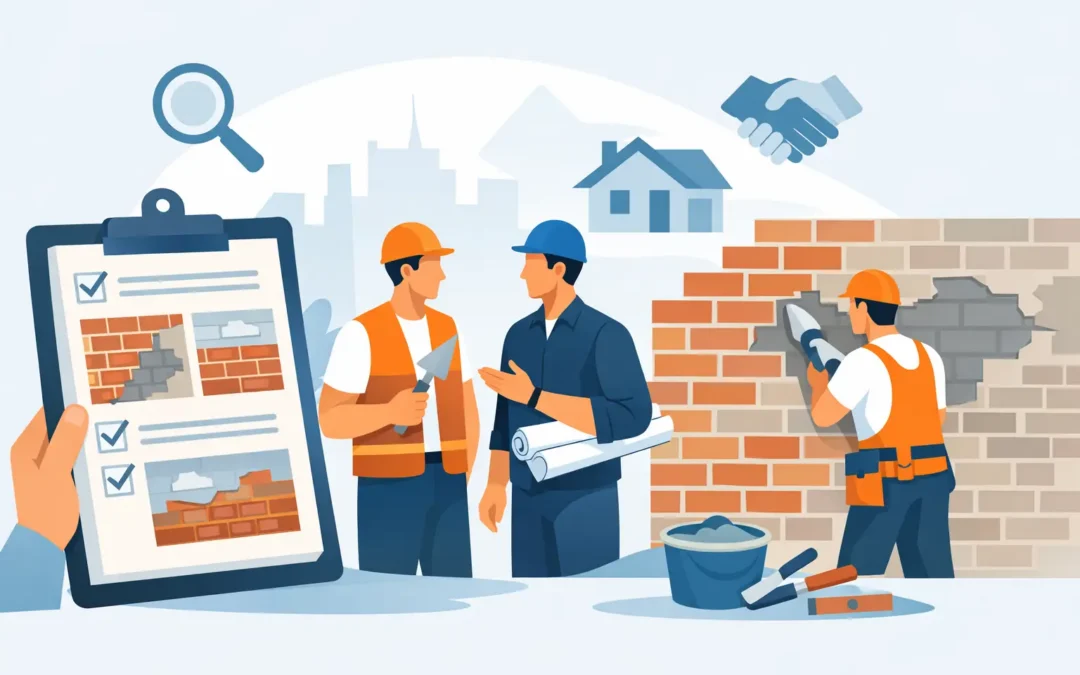
A cracked exterior wall rarely stays just a cosmetic issue for long. On commercial properties, masonry damage can lead to water intrusion, tenant complaints, safety concerns, and avoidable capital expense. That is why choosing the right masonry wall restoration contractors matters early, before a localized defect turns into a broader building envelope problem.
For property owners and facility managers, restoration is not simply about patching visible damage. It is about protecting asset value, maintaining a professional appearance, and making sure repairs hold up under weather exposure, occupancy demands, and code requirements. The right contractor approaches the work with that broader responsibility in mind.
What masonry wall restoration contractors actually do
Masonry restoration is often misunderstood as basic repair work. In reality, it is a specialized process that combines diagnosis, material compatibility, structural awareness, moisture management, and finish quality. On commercial buildings, that can include repairing cracked block walls, replacing damaged brick or stone, rebuilding unstable sections, repointing deteriorated mortar joints, correcting water-related failures, and restoring surfaces after years of deferred maintenance.
Good masonry wall restoration contractors start by identifying why the wall failed in the first place. The visible symptom may be cracking, spalling, bowing, staining, or joint deterioration, but the root cause may be settlement, chronic moisture intrusion, thermal movement, impact damage, poor prior repairs, or age-related material breakdown. If the cause is missed, the repair may look finished while the underlying issue continues.
That diagnostic step is especially important on active commercial sites. Office buildings, retail centers, medical facilities, and industrial properties all have different operational pressures. Repairs need to be durable, but they also need to be planned around access, occupant safety, tenant visibility, and business continuity.
Why commercial properties need a restoration mindset
A commercial wall has to do more than stand upright. It contributes to weather protection, appearance, life safety, and long-term operating performance. When masonry begins to fail, the consequences can spread into other systems. Water entering through open joints or failed wall sections can affect interiors, finishes, insulation, adjacent concrete, and even indoor environmental conditions.
This is one reason restoration should not be treated as an isolated trade issue. On many properties, masonry problems intersect with roofing transitions, sealants, window systems, structural components, and drainage conditions. A contractor with broader building experience is often better positioned to see the full picture and coordinate repairs that solve the actual problem instead of only the surface damage.
There is also a timing issue. Waiting can make a manageable restoration project much more disruptive. A few failed joints may require repointing today, while the same wall could need larger demolition and rebuilding after another season of water exposure. Early intervention usually gives owners more control over cost, scheduling, and tenant impact.
How to evaluate masonry wall restoration contractors
Not every masonry contractor is a restoration contractor. New construction skills do not always translate cleanly to repair and restoration work, where matching existing materials and preserving surrounding assemblies are critical. Commercial clients should look for a contractor that can document relevant restoration experience, explain failure mechanisms clearly, and provide a practical scope based on building conditions rather than assumptions.
A strong contractor will usually begin with a site assessment and a direct conversation about building history. They should want to know when the damage appeared, whether leaks have been reported, what prior repairs have been attempted, and how the property is used day to day. That level of inquiry is usually a good sign. It shows they are thinking beyond production and toward performance.
It is also worth paying attention to how the contractor discusses materials. Masonry systems depend on compatibility. Mortar that is too hard, replacement units that absorb moisture differently, or sealants applied in the wrong location can create new problems. Experienced restoration contractors understand that the repair has to work with the existing wall, not fight against it.
Communication matters just as much as trade skill. Commercial stakeholders need clear proposals, realistic schedules, safety planning, and coordination around access. If the building is occupied, the contractor should be able to explain how staging, noise, debris control, and work sequencing will be managed. A dependable partner makes the project easier to run, not harder to track.
Common repair conditions on South Florida properties
In South Florida, masonry walls are exposed to a demanding mix of heat, humidity, wind-driven rain, and salt-laden air in many locations. Those conditions accelerate certain forms of deterioration, especially when walls have aging joints, prior patchwork repairs, or gaps in waterproofing strategy.
Cracking is one of the most common reasons owners call for restoration. Some cracks are superficial, while others point to movement, settlement, or moisture-related expansion. Spalling is another frequent issue, where the face of brick, block, or stucco-coated masonry begins to break down. This often signals trapped moisture or material fatigue.
Mortar joint deterioration is also common on older commercial buildings. As joints erode, the wall becomes more vulnerable to water entry. Efflorescence, staining, and interior moisture complaints can follow. In some cases, wall sections may become loose or unstable enough to create a safety hazard, especially around parapets, facades, entry areas, and service corridors.
These conditions do not all require the same response. That is where experienced masonry wall restoration contractors provide value. Some walls can be stabilized and restored with targeted repairs. Others require partial rebuilding or more extensive envelope coordination. The right answer depends on the condition of the wall, the age of the building, and the owner’s long-term plan for the asset.
What a well-run restoration project looks like
The best restoration projects are organized before the first repair begins. That means the scope has been validated, access requirements are understood, safety procedures are in place, and material selections have been made with performance in mind. On commercial properties, that planning stage often determines whether the project stays controlled or becomes disruptive.
During execution, quality control should be visible. Damaged material should be removed carefully, surrounding areas protected, and repairs installed in a way that supports structural integrity and appearance. When repointing is part of the scope, joint preparation and mortar selection matter. When rebuilding is required, alignment, anchorage, and finish consistency matter just as much.
Owners should also expect documentation and communication throughout the process. If field conditions change, the contractor should explain why and recommend the next step without creating confusion. Restoration work often reveals hidden conditions once surfaces are opened. That is normal. What matters is how clearly those discoveries are handled.
For many clients, the biggest differentiator is coordination. A contractor that can manage masonry work alongside related building services reduces friction across the project. On complex properties, that can save time and prevent conflicts between trades, especially when repairs affect waterproofing details, adjacent concrete, exterior finishes, or occupied areas.
Cost, trade-offs, and long-term value
Commercial decision-makers are right to ask about cost, but restoration should be evaluated as a life-cycle investment, not just a line-item repair. The lowest proposal is not always the lowest cost over time. If the scope is incomplete or the materials are poorly matched, the wall may require repeat work, interior repairs, or emergency intervention later.
That said, not every building needs the most extensive restoration approach. In some cases, a phased plan makes more sense than a full facade project, especially when budgets need to be managed across multiple priorities. A trustworthy contractor will discuss those trade-offs honestly. They should be able to distinguish between conditions that are urgent, conditions that should be addressed soon, and conditions that can be monitored while a broader capital plan is developed.
This practical approach is often where experienced commercial contractors stand apart. They understand that owners need repairs that are technically sound and financially responsible. They also understand that timing, occupancy, and portfolio planning influence what the right project looks like.
Choosing a contractor you can keep working with
Wall restoration is often the first sign that a property needs a more proactive maintenance strategy. Once an owner has identified a reliable contractor, that relationship can support more than one repair. It can improve how exterior issues are tracked, prioritized, and resolved across the property.
For clients managing commercial buildings in South Florida, that matters. Buildings here need consistent attention, and reactive repairs are rarely the most efficient path. A contractor like Nexscope Services brings value not only through masonry expertise, but through the ability to support broader building needs with the same focus on quality, compliance, and dependable execution.
If your building is showing signs of masonry deterioration, the best next step is not to wait for the damage to become obvious to everyone else. It is to get a clear assessment from a contractor who understands restoration, understands commercial operations, and knows how to protect the building for the long run.