
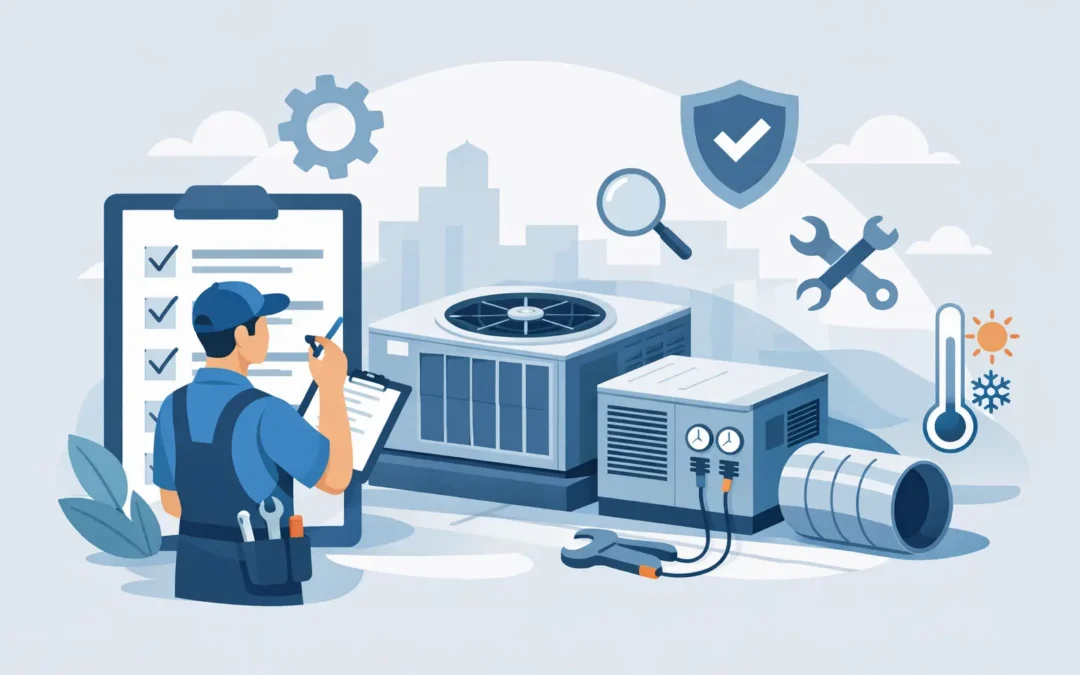
A failed rooftop unit rarely picks a convenient time. It hits during a tenant complaint, a heat wave, a building inspection, or the busiest week of the quarter. That is why a commercial HVAC preventive maintenance checklist matters. For property owners and facility managers, it is not just a service document. It is a way to control risk, protect occupancy, and avoid expensive surprises.
In commercial buildings, HVAC performance affects more than comfort. It influences indoor air quality, energy costs, equipment life, and in many cases, tenant retention. A medical office has little room for temperature swings. A retail center cannot afford poor airflow during peak traffic. An industrial facility may have process demands that put added pressure on cooling and ventilation systems. Preventive maintenance helps keep those demands from turning into avoidable failures.
What a commercial HVAC preventive maintenance checklist should cover
A useful checklist does more than confirm that a technician visited the site. It should reflect the actual needs of the equipment, the operating environment, and the building’s usage patterns. In South Florida, for example, heat, humidity, salt exposure, and long cooling seasons can accelerate wear. Systems in coastal or high-demand environments often need closer monitoring than equipment in milder conditions.
At a minimum, a commercial HVAC preventive maintenance checklist should address airside components, refrigeration systems, electrical connections, controls, drainage, safety devices, and overall equipment condition. It should also create a record of readings, deficiencies, and recommended corrective work. Without that documentation, maintenance becomes harder to track and budgeting becomes reactive.
Core inspection points for commercial HVAC systems
Air filters, airflow, and indoor performance
Filter inspection and replacement are basic, but they are not minor. Dirty filters restrict airflow, increase fan strain, reduce cooling performance, and can contribute to poor indoor air quality. In high-traffic buildings or dusty environments, filters may need replacement more frequently than a standard schedule suggests.
Technicians should also inspect supply and return airflow, blower assemblies, belts, pulleys, and dampers. If airflow is off, the cause may not be the unit alone. Closed dampers, worn belts, dirty coils, or blocked returns can all create uneven temperatures and comfort complaints.
Evaporator and condenser coil condition
Coils carry a heavy load in system efficiency. When evaporator or condenser coils are dirty, the unit works harder to reach setpoint, which drives up energy use and shortens component life. Coil cleaning should be part of routine maintenance, especially in environments with airborne debris, grease, or salt.
The inspection should also look for corrosion, fin damage, and signs of restricted heat transfer. In coastal markets, corrosion control is not optional. It is part of preserving the asset.
Refrigerant charge and circuit health
Low refrigerant does not just reduce cooling capacity. It can damage compressors, create freeze-up conditions, and point to leaks that will worsen over time. Preventive maintenance should include checking operating pressures, temperatures, and superheat or subcooling where applicable.
If readings are off, the right next step is diagnosis, not automatic top-off. Refrigerant loss means something has changed in the system. A checklist should help identify that early, before the issue becomes a major repair.
Electrical components and controls
Commercial HVAC systems depend on stable electrical performance. Loose connections, failing capacitors, worn contactors, damaged wiring, and overheating terminals are common sources of breakdowns. During preventive maintenance, technicians should inspect and tighten electrical connections where appropriate, test key components, and check for signs of wear or heat damage.
Controls matter just as much. Thermostats, sensors, relays, time clocks, and building automation interfaces should be tested for proper operation. A unit can be mechanically sound and still perform poorly if the controls are inaccurate or out of sequence.
Drain lines, pans, and moisture management
Clogged condensate drains are one of the most common and preventable HVAC issues in humid climates. Water backup can damage ceilings, create slip hazards, and contribute to mold concerns. Drain pans, trap assemblies, and drain lines should be inspected and cleared as part of every maintenance visit.
This is one area where a small oversight can create a large downstream cost. The checklist should treat moisture control as a priority, not a side item.
Motors, bearings, and moving parts
Fan motors, blower motors, and associated moving components should be checked for amperage draw, vibration, overheating, and unusual noise. Bearings and lubrication points, where applicable, should be serviced according to manufacturer requirements.
Not every issue requires immediate replacement, but trend changes matter. A motor that is still running can still be showing signs of failure. Good maintenance catches those signals before a shutdown forces the decision.
Seasonal timing matters
A checklist is only effective if the maintenance schedule matches the building’s operating reality. For most commercial properties, HVAC systems should be inspected at least twice a year, typically before peak cooling and heating periods. In South Florida, where cooling demand remains high for much of the year, quarterly service is often the better standard.
That does not mean every property needs the same service frequency. A small office with stable occupancy may need less attention than a restaurant, medical facility, or multi-tenant retail center. Runtime, air quality requirements, occupancy density, and site conditions all affect the right schedule. The goal is to align maintenance with actual system stress, not just a calendar reminder.
Why checklists fail in the field
Many maintenance programs look good on paper and still miss the mark. The most common problem is that the checklist is too generic. If every property receives the same inspection sheet regardless of equipment type, age, or site conditions, important issues can be missed.
Another problem is treating preventive maintenance as a pass-fail exercise. A technician checks boxes, but the client never gets useful insight into what is trending, what needs repair, and what can wait until the next budget cycle. For building owners and managers, that gap matters. The checklist should support planning, not just compliance.
It also helps to distinguish between maintenance and repair. Preventive maintenance can identify worn belts, dirty coils, failing capacitors, and control issues. It does not eliminate the need for repairs or capital replacement. What it does is improve timing. It gives stakeholders a chance to act before a failure disrupts operations.
What facility teams should expect from a service partner
A strong HVAC maintenance program should come with clear reporting, practical recommendations, and a consistent service process. Facility teams should know what was inspected, what readings were taken, what deficiencies were found, and which items need immediate attention versus monitoring.
For multi-site owners and managers, consistency is especially important. Standardized reporting helps compare conditions across locations, prioritize spending, and reduce vendor confusion. That is one reason many clients prefer a single-source provider with broader building expertise. When HVAC maintenance is part of a larger property strategy, coordination improves and blind spots shrink.
Nexscope Services approaches preventive maintenance with that broader building perspective in mind. HVAC performance does not exist in isolation. Drainage issues, envelope conditions, rooftop access, electrical reliability, and tenant operations all influence system health and maintenance planning.
Building a better commercial HVAC preventive maintenance checklist
The best checklist is specific enough to be useful and flexible enough to match the property. It should identify equipment by location and type, include measurable readings, document deficiencies clearly, and create a service history over time. It should also reflect manufacturer guidance, code considerations, and the building’s operating demands.
For decision-makers, the value is straightforward. A better checklist supports fewer emergency calls, more predictable maintenance costs, better energy performance, and longer equipment life. It also supports cleaner communication between property managers, ownership groups, and service contractors.
There is no checklist that guarantees zero failures. Older equipment can still break. Extreme weather can still stress systems. Deferred repairs can still catch up with a property. But a disciplined maintenance process gives you control over far more than most buildings currently have.
If your HVAC plan is based on waiting for complaints or responding when a unit goes down, the cost is usually higher than it looks at first. A practical, well-documented checklist gives you a chance to stay ahead of the problem, which is usually where the real savings begin.