
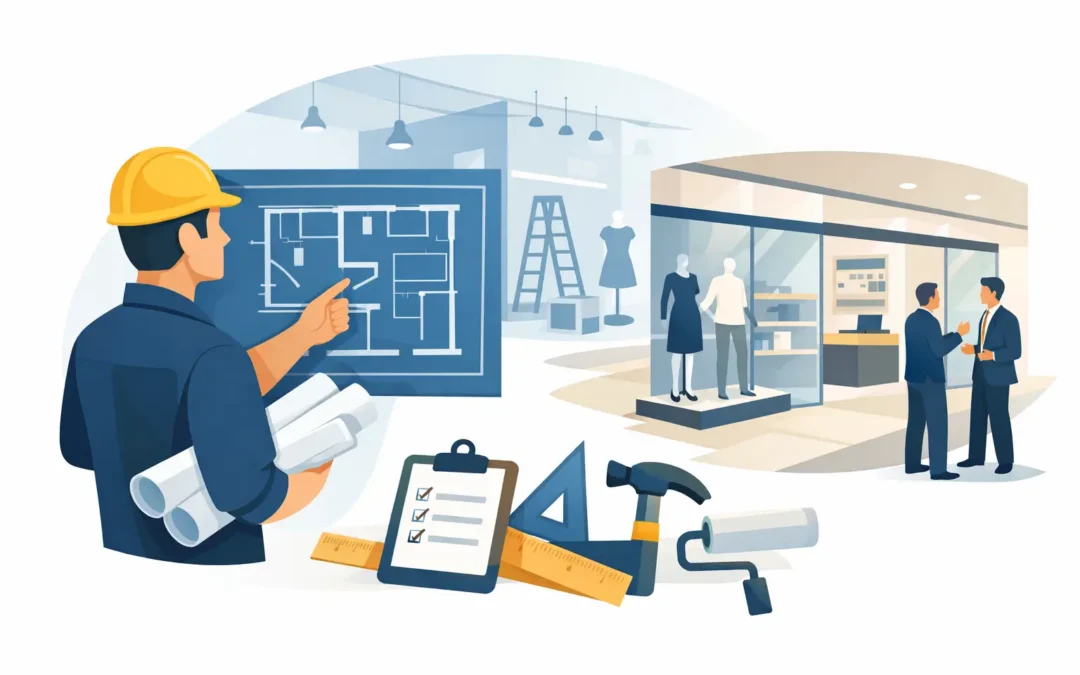
A delayed opening can cost more than construction dollars. It can mean missed lease obligations, postponed revenue, frustrated tenants, and a brand launch that starts under pressure. That is why choosing the right retail store build out contractor matters early, not after drawings are approved and the schedule is already tight.
Retail build-outs move fast, but they are rarely simple. A storefront may look straightforward from the sidewalk, yet behind the finish selections there are permit requirements, MEP coordination, ADA considerations, life safety systems, delivery constraints, landlord rules, and inspection milestones that all need to line up. For owners, developers, and facility teams, the contractor is not just there to build walls and install finishes. The contractor is there to protect the schedule, manage risk, and keep the project aligned with business goals.
What a retail store build out contractor actually does
A strong retail store build out contractor manages much more than field labor. The job starts with understanding the lease requirements, the condition of the existing space, and the design intent. From there, the contractor helps turn plans into a workable construction path with realistic sequencing, procurement planning, and cost control.
In retail environments, timing is tied directly to revenue. If lighting packages are delayed, millwork dimensions are off, or inspections are missed, the opening date can move quickly. A qualified contractor sees those pressure points before they become expensive problems. That includes coordinating demolition, framing, electrical, HVAC, plumbing, flooring, ceilings, storefront systems, paint, signage preparation, and final punch work in a way that supports turnover on time.
The best contractors also understand that retail construction happens in live commercial environments. Work may need to be staged around neighboring tenants, delivery windows, shopping center requirements, and public safety concerns. Clean jobsite management, communication with property stakeholders, and disciplined supervision are not extras in this setting. They are core parts of the job.
Why retail build-outs require a different kind of contractor
Retail is different from a standard office renovation or a general interior refresh. The space has to perform for customers, employees, and operations from day one. That means details carry more weight.
A fitting room that misses dimensional requirements, a sales floor with uneven lighting, or a checkout area without the right power and data support can affect customer experience immediately. Back-of-house areas matter just as much. Storage, employee circulation, restroom access, security hardware, and HVAC balance all influence whether the store functions smoothly once doors open.
This is where experience matters. A contractor familiar with retail understands that appearance and operations are tied together. They know why storefront visibility, finish durability, traffic flow, and equipment coordination deserve attention early. They also know that some decisions involve trade-offs. A lower-cost finish might reduce upfront expense but wear poorly in a high-traffic environment. A compressed schedule may be possible, but only if long-lead items are identified early and approvals move without delay.
The schedule is part of the build
Many retail clients focus first on price, which is understandable. But the lower number is not always the lower project cost if it comes with weak planning or limited coordination. In retail, schedule discipline often saves as much value as direct construction savings.
A dependable contractor builds the schedule around approvals, procurement, rough-in work, finishes, inspections, and punch completion. They identify dependencies clearly. For example, flooring may depend on moisture conditions, millwork installation may depend on field verification, and final electrical trim may depend on fixture delivery. If those relationships are not managed properly, crews end up waiting, reworking, or rushing at the end.
Compliance is not optional
Retail projects must meet building codes, fire and life safety standards, accessibility requirements, and local jurisdiction expectations. In South Florida, that can also mean heightened attention to mechanical performance, storefront conditions, and permit documentation. A contractor who treats compliance as a box-checking exercise can create real exposure for the owner.
The right team approaches compliance as part of project execution. They coordinate with plans, manage inspections carefully, document changes, and make sure installed work supports final approval. That protects the opening date and reduces post-construction issues that can affect operations later.
How to evaluate a retail store build out contractor
A contractor should be judged on more than whether they can physically complete the work. Most commercial contractors can build. The better question is whether they can build this kind of space under this kind of pressure.
Start by looking at relevant project experience. Retail build-outs have their own rhythm, and that matters. Ask how the contractor handles occupied centers, landlord coordination, permit tracking, long-lead procurement, and finish-level quality control. A contractor with broad commercial experience can be a strong fit, but they need systems that support retail timelines and detail requirements.
Communication is another key indicator. During preconstruction, pay attention to how clearly the contractor identifies scope gaps, lead time risks, allowance assumptions, and owner responsibilities. Vague answers early usually become expensive change conversations later. Clear communication is often the first sign of clear project management.
You should also evaluate trade coordination. Retail spaces rely heavily on proper alignment between framing, mechanical, electrical, plumbing, fire protection, and finish trades. When that coordination is weak, the job slows down and the finished product suffers. Ceiling conflicts, misplaced diffusers, poorly located outlets, and uneven finish transitions are usually not labor problems alone. They are management problems.
Questions worth asking before award
Ask who will actually run the project day to day, how often updates will be provided, and how schedule changes will be communicated. Ask how submittals, substitutions, and field issues are handled. It is also smart to ask how punch lists are managed, because the final 10 percent of a retail project often determines whether the opening feels controlled or chaotic.
For owners with multiple locations or broader facility needs, it may also make sense to consider whether the contractor can support related site and building work beyond the tenant interior. That might include concrete repairs, storefront improvements, HVAC adjustments, paving, exterior maintenance, or post-opening service support. A single-source partner can reduce coordination burden significantly, especially when the project sits within a larger commercial asset strategy.
Common problems that derail retail build-outs
Some delays are unavoidable. Jurisdiction review times can shift, product deliveries can move, and field conditions can differ from plans. But many retail project problems are predictable.
One common issue is incomplete preconstruction planning. If the existing conditions are not properly verified, the team can discover slab irregularities, electrical capacity limitations, or mechanical conflicts after work begins. Another issue is late decision-making. If finish approvals, fixture selections, or owner-furnished equipment details come in too late, the field team loses momentum.
Another frequent problem is underestimating closeout. Final inspections, touch-ups, fixture installation, cleaning, and punch corrections all take time. Retail spaces are judged visually, so finishing strong matters. A contractor who pushes hard through rough construction but loses control at turnover can still jeopardize the opening.
The value of a contractor who sees the full property picture
For many commercial owners and managers, a store build-out does not happen in isolation. It may be part of a broader repositioning effort, a tenant improvement program, or a multi-phase property upgrade. In those cases, the best contractor is often one who understands both the interior scope and the surrounding building systems that affect it.
That broader view becomes valuable when HVAC performance needs adjustment for a new layout, exterior paving affects access, concrete work impacts storefront entry, or building services need to continue without disrupting neighboring occupants. Contractors with wider facility and infrastructure capabilities can often solve issues faster because they are not limited to one narrow trade category.
This is where a company like Nexscope Services can bring practical value. When construction management is backed by in-house understanding of commercial building systems and site conditions, clients get a more coordinated path from planning through completion. That can make a real difference in schedule protection and long-term asset performance.
What good looks like at project closeout
A successful retail build-out is not just a finished space. It is a space that passes inspection, supports operations, reflects the brand properly, and opens without a rush of unresolved issues. Good closeout means systems are functioning, finishes are complete, punch items are controlled, and the owner is not chasing basic corrections after turnover.
It also means the store is built for use, not just for photos. Durable materials are installed correctly. HVAC supports occupant comfort. Lighting works for merchandising and customer flow. Back-of-house areas are practical. The space is compliant, clean, and ready to perform.
If you are selecting a retail store build out contractor, look beyond the proposal total and ask who will protect your schedule, manage complexity, and deliver a store that works as well as it looks. The right partner does more than build the space. They help the opening happen the right way.